
Blog · Card Meanings · November 18, 2026
Turtle Oracle Card Meaning: Do One Thing Slowly This Week
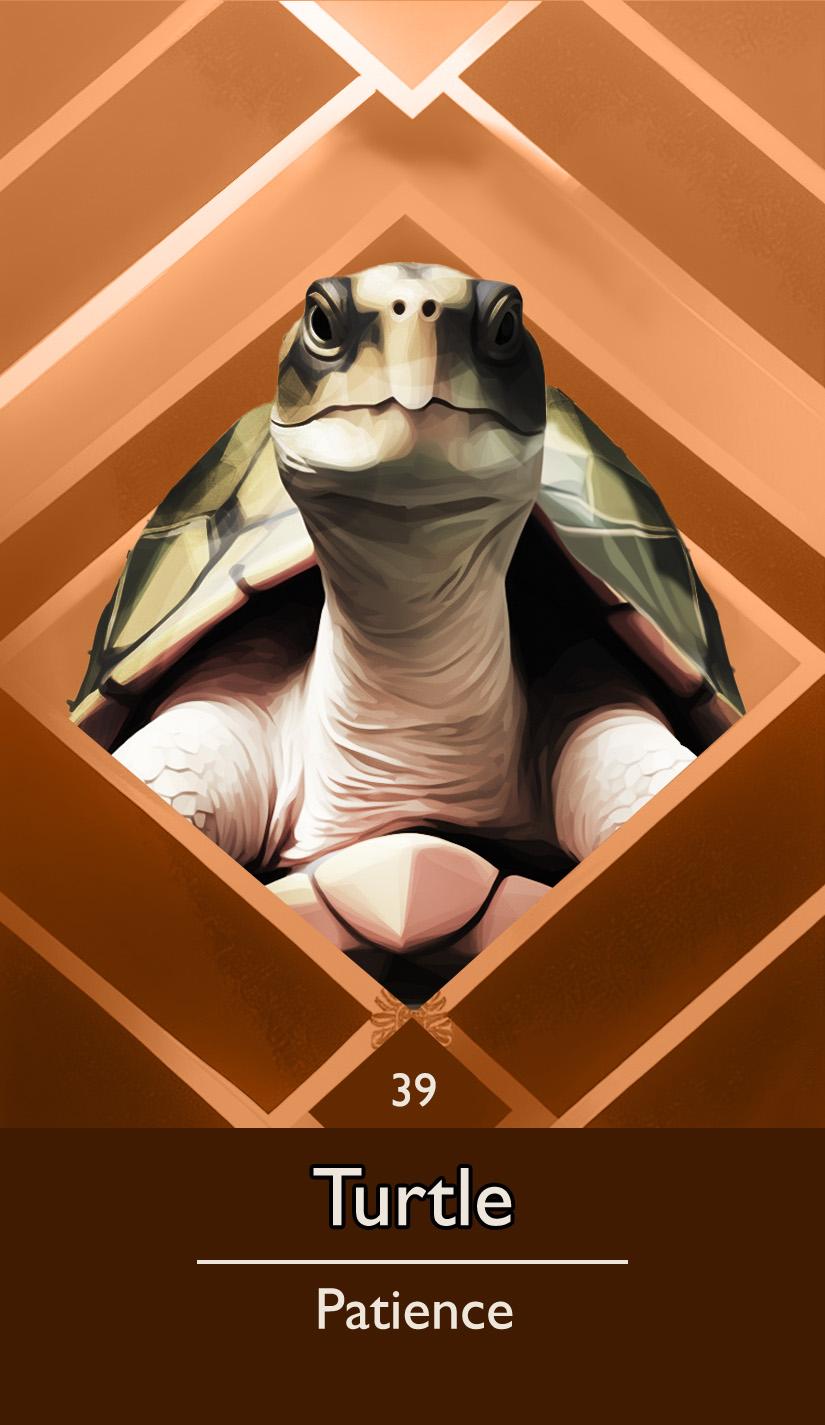
Turtle Oracle Card Meaning: Patience at Your Own Pace
The Turtle oracle card means patience. It tells you to slow down, stop measuring yourself against other people's speed, and move at a pace you can sustain. Its core message is that speed is not always the path to the destination.
In a daily draw, Turtle is rarely about the big picture. It is usually a comment on how you are moving today: the rush, the pressure, the sense that you are behind.
The takeaway from the deck is simple. The turtle wins the race by staying in his own lane.
What the Turtle Card Points At
Turtle is not a card about laziness, and it is not permission to stall. It points at the gap between the pace you are running and the pace the work actually requires.
Most men know this gap. You answer messages while eating, skim the instructions, and promise a deadline before you have looked at the task. You call it efficiency. Sometimes it is. Often it is just speed with no direction, and the speed itself starts to feel like proof that you are doing something important.
Turtle asks three plain questions:
- Where am I rushing right now?
- Who or what set this pace? Me, or someone else's clock?
- What am I missing because I am moving this fast?
The last question is the one that matters. Rushing doesn't just cost you accuracy. It costs you the experience of the thing itself: the meal, the conversation, the work, the walk. When the card says "enjoy the journey," that is what it means. You are only present for the parts you slow down enough to be in.
Your Own Lane: The Real Image Behind the Card
The line to hold onto is the turtle staying in his own lane. A lane implies other people are in theirs, and they are probably moving faster. Turtle doesn't pretend otherwise.
The pull to speed up usually comes from comparison. Someone your age has the bigger title. Someone you started with finished first. Your feed is full of people announcing progress. If you adjust your pace to theirs, you inherit their route, their resources, and their timeline. None of those fit your life.
Staying in your lane doesn't mean ignoring the road. It means you stop letting other people's speed set your own. Pace is information, not a verdict. Fast does not mean ahead, and slow does not mean behind. Someone who steadily covers ground without burning out often outlasts someone who sprints and has to stop.
How to Read Turtle in a Daily Draw
When Turtle shows up, don't ask what it predicts. Cards mirror; they don't forecast. Ask what it reflects about your morning.
A few ways to read it:
If your day is packed: Turtle is not telling you to cancel everything. It is asking where you can create one pocket of deliberate pace inside the pressure. A single slow task changes the texture of a full day.
If you are chasing a result: Look at whether the urgency is real. Is there an actual deadline, or just a feeling that you should be further along? A real deadline calls for focus. A feeling calls for a second look.
If you feel stuck or behind: Turtle may be pointing at steadiness rather than speed. Small, consistent movement counts. Ask whether you have been looking for a leap when the situation needs steps.
If you drew Turtle after a fast, successful stretch: Check what you have been skipping. Sometimes the card shows up to ask what you have not yet absorbed.
One caution: patience is not the same as avoidance. If you have been "taking your time" on a decision for months because you are afraid of it, that is not Turtle. That is a different conversation, and a card like the Maverick or Cheetah would speak to it more directly. Turtle's patience has a direction. You are still moving. You are just not frantic.
The Homework: Choose One Thing to Do Slowly
The deck's assignment for this card is specific. Choose one thing this week to do slowly and deliberately. Then notice what you experience differently.
Keep it small and concrete. Some options:
- A meal. No phone, no screen. Eat the whole thing at the table.
- A morning routine. Make coffee, shave, or get dressed without hurrying through any step.
- A walk. Leave the earbuds behind and cover the same route more slowly than usual.
- A task at work. Pick one piece of work you normally blast through and do it carefully, start to finish.
- A conversation. Let the other person finish. Pause before you answer.
- A repair or project. Read the instructions. Measure twice. Take the time you usually skip.
Pick one, not five. The point isn't to turn your whole life into slow motion. It is to run a small experiment and see what changes.
What to Notice
After you do it, spend a minute on what you noticed. Some useful prompts:
- What did I see, hear, or taste that I normally miss?
- Did the quality of the work change?
- Where did I feel the urge to speed up, and what was behind it?
- Was the slow version worse, or just unfamiliar?
You might find the slow version took only a few minutes longer. You might find it took longer and was still better. You might find nothing much changed, which is also worth knowing. Whatever you find, it is real data about your own pace, not something borrowed from a book.
What to Do With Turtle Today
If Turtle is today's card, here is a short plan:
- Pick your one slow thing. Choose it now, before the day takes over.
- Name the pace pressure. Write down one place you feel rushed and who set that pace.
- Do the slow thing on purpose. Don't multitask it. Give it your full attention.
- Note one difference. Even a single sentence is enough. Tonight, ask yourself what you noticed.
If you keep a morning routine, this slots in easily. If you don't, a card like this is a reasonable reason to start. For more on that, see the past readings archive to look back at how other draws have landed.
Why This Card Is Worth Taking Seriously
It is easy to dismiss patience as a soft virtue, something for people with time to spare. But most of what lasts gets built slowly: strength, skill, trust, a marriage, a business, a reputation. None of it can be rushed into existence, and the attempt usually creates rework.
Turtle's quiet argument is that consistency beats intensity over any long stretch. You don't have to like the pace. You just have to keep your own.
If you are not sure which card fits your temperament, the Oracle Messenger quiz is a quick way to find out.
Draw Today's Reading
If Turtle came up for you, take the homework seriously: one thing, done slowly, with your attention on it. If you haven't drawn yet, draw today's reading and see what the deck puts in front of you.