
Blog · Card Meanings · November 10, 2026
Neptune Oracle Card Meaning: Ask Someone Outside Your Field
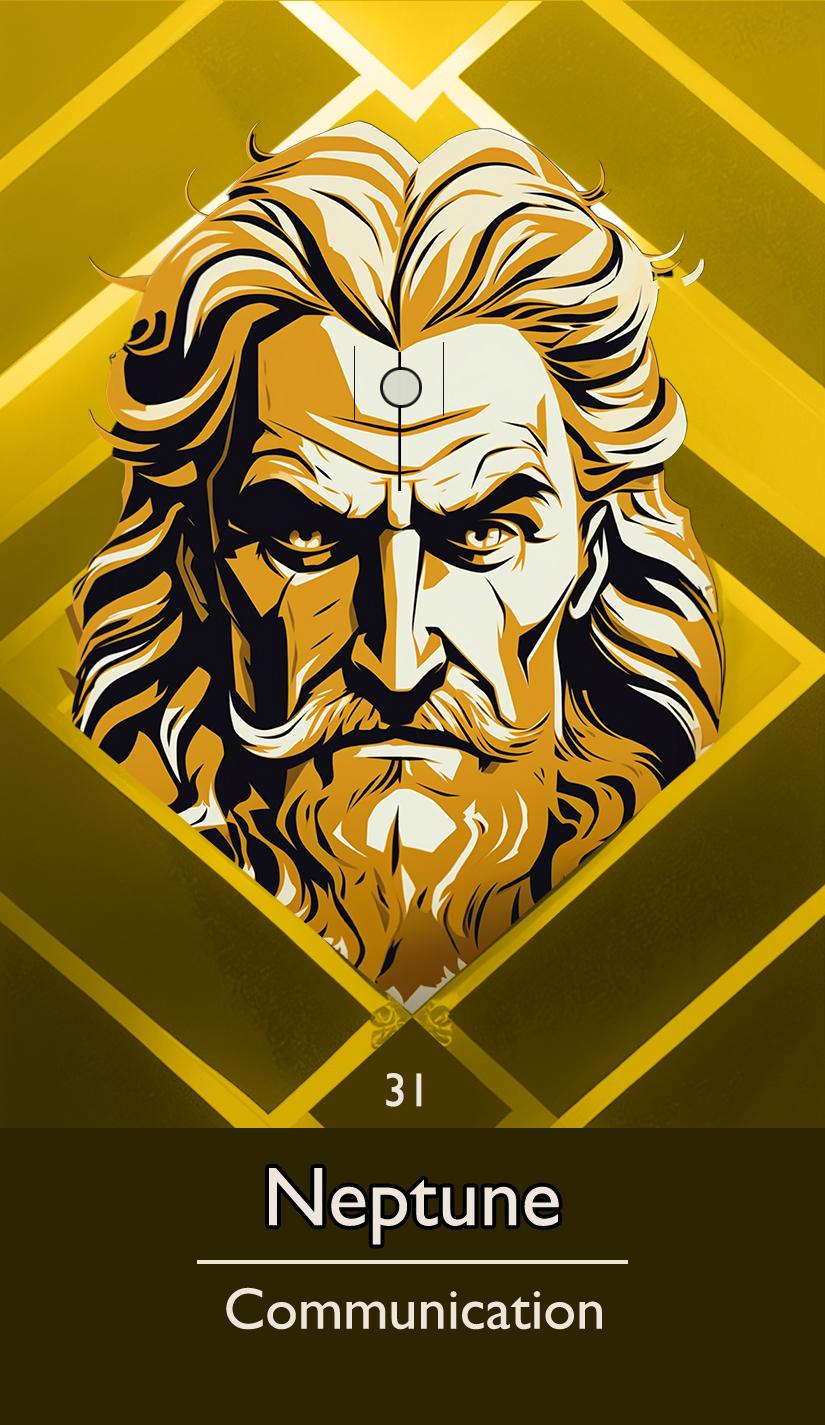
The Neptune oracle card means the answer to your problem probably isn't where you've been looking. Its keyword is communication, and its message is to think creatively, step outside the conventional box, and use conversation as a tool, not just logic.
This page covers what the card points at, how to read it in a daily draw, and one specific thing to do with it today.
Neptune Oracle Card Meaning: Look Outside the Box
Neptune is the card of the sideways move. You've been working a problem the way you always work problems: more effort, more analysis, a tighter plan. The card asks whether the method is the thing that's stuck.
The deck's core message is simple: think creatively and find solutions outside the conventional box. The keyword, communication, tells you where to look. Creative thinking in this card isn't a solo act. It happens when you explain a problem to someone who sees the world differently, or when you describe it in words you haven't used before.
The deck's takeaway is that creative communication opens doors that logic cannot. That isn't an argument against logic. Logic is excellent at working inside a frame. It's poor at questioning the frame, and that's the job Neptune hands you.
What the Card Points At
Neptune tends to land on a few kinds of situations:
- A problem you've attacked the same way three or more times. Repetition without progress is the signal.
- A conversation that keeps going in circles. You and the other person are using the same arguments and getting the same result.
- A decision where every option on the list feels wrong. Sometimes the list is the issue.
- Expertise that has become a cage. The longer you've done something, the harder it is to see what a newcomer sees instantly.
None of this is a prediction. The card doesn't say a clever answer is coming. It says the answer, if there is one, is unlikely to come from doing the same thing harder.
How to Read Neptune in a Daily Draw
A single card gives you a prompt, not a verdict. Here's a way to read Neptune that keeps it honest.
Step 1: Name the problem you keep hitting
Don't pick the biggest problem in your life. Pick the one you've been circling lately: a work bottleneck, a stalled project, a recurring argument. If nothing comes to mind in ten seconds, the card may be about how you communicate in general. Skip ahead to the conversation section.
Step 2: Write down your standard approach
One sentence: "When this comes up, I usually ___." Most men skip this step and go straight to brainstorming. But you can't leave the box until you can see its walls.
Step 3: Ask what you've assumed
List two or three assumptions baked into your approach. For example: "This has to be solved by me." "This has to happen before the deadline." "The other person already knows what I mean." Neptune's question lives here. Which assumption have you never tested?
Step 4: Notice the communication angle
Because the keyword is communication, check whether the real problem is unspoken. Is there something you haven't said, asked, or explained clearly? Often the conventional solution fails because the people involved have never been told what the problem actually is.
The Deck's Homework: One Problem, A Completely Different Angle
The assignment attached to this card is specific: approach one problem this week from a completely different angle, and ask someone outside your field for their perspective.
Both halves matter. Here's how to do each.
Part one: Change the angle
Pick one problem and try one of these shifts. Choose just one.
- Flip the goal. Instead of "how do I get this done faster," ask "what would make this unnecessary?"
- Change the medium. If you always think in lists, sketch it. If you always talk it out, write it. A different format surfaces different ideas.
- Borrow a solved problem. Ask where someone else has faced a similar structure, such as a kitchen, a construction site, a sports team, or a classroom, and what they do.
- Shrink the scale. Solve a tiny version of the problem today. Constraints push people toward unconventional moves.
- Explain it to a beginner. Say it out loud as if to a smart fourteen-year-old. Gaps in your own framing show up fast.
Give it twenty minutes, not a weekend. The point is to loosen the grip, not to produce a masterpiece.
Part two: Ask someone outside your field
This is the harder half, because it asks you to be a little exposed. You're telling someone you don't have the answer. For a lot of men that costs more than the problem itself.
Pick someone who doesn't share your training or your industry: a friend who's a nurse if you work in software, a contractor if you're in finance, a teacher if you're in sales. Then keep the ask small and clear:
> "I'm stuck on something and I'd like a fresh set of eyes. Can I describe it in two minutes and get your gut reaction? You don't need to know my field."
Then follow three rules:
- Describe the problem, not your preferred solution. If you lead with your answer, you'll get a comment on your answer.
- Skip the jargon. If you can't explain it without insider terms, that's useful information on its own.
- Don't defend. When they say something that sounds naive, write it down instead of correcting it. Naive questions are the point.
You may get nothing usable. That happens. But the question "why do you do it that way?" from an outsider has a long record of exposing assumptions nobody inside the field thought to challenge.
Where Neptune Can Mislead You
A few honest cautions.
Creative isn't the same as reckless. The card doesn't tell you to throw out a sound plan because it feels boring. If your conventional approach is working, keep it. Neptune applies when it isn't.
Avoidance can dress up as creativity. If you've been dodging a hard conversation or an unpleasant task, "thinking outside the box" can become a way to keep dodging. Ask yourself whether the unconventional idea is solving the problem or just postponing the discomfort.
An outside opinion is input, not instruction. You still make the call. Someone outside your field lacks context, and that's both why they're useful and why they can be wrong.
If the thing you're stuck on is how you feel, not what you're working on, and it's been heavy for a while, talking to a doctor or a licensed counselor is the right move. A card draw is a reflection tool. It isn't a substitute for professional support.
What to Do With Neptune Today
Keep it to three actions:
- Write the problem and your usual approach in two sentences.
- Try one different angle from the list above for twenty minutes.
- Send one message to someone outside your field asking for a two-minute fresh perspective. Send it before lunch, while the idea is fresh and you haven't talked yourself out of it.
Tonight, ask yourself one question: What did I see that I couldn't see from inside my own habits? If the honest answer is "not much," that's fine. Try a different angle tomorrow.
Compare this card with the other communication-focused draws in the readings archive, or take the Oracle Messenger quiz to see which archetypes you tend to draw on.
If you want to see what the deck has for you today, draw today's reading. It's free, takes a minute, and gives you one card and one question to carry through the day.