
Blog · Card Meanings · November 12, 2026
Black Panther Oracle Card Meaning: Take One Step Toward a Fear
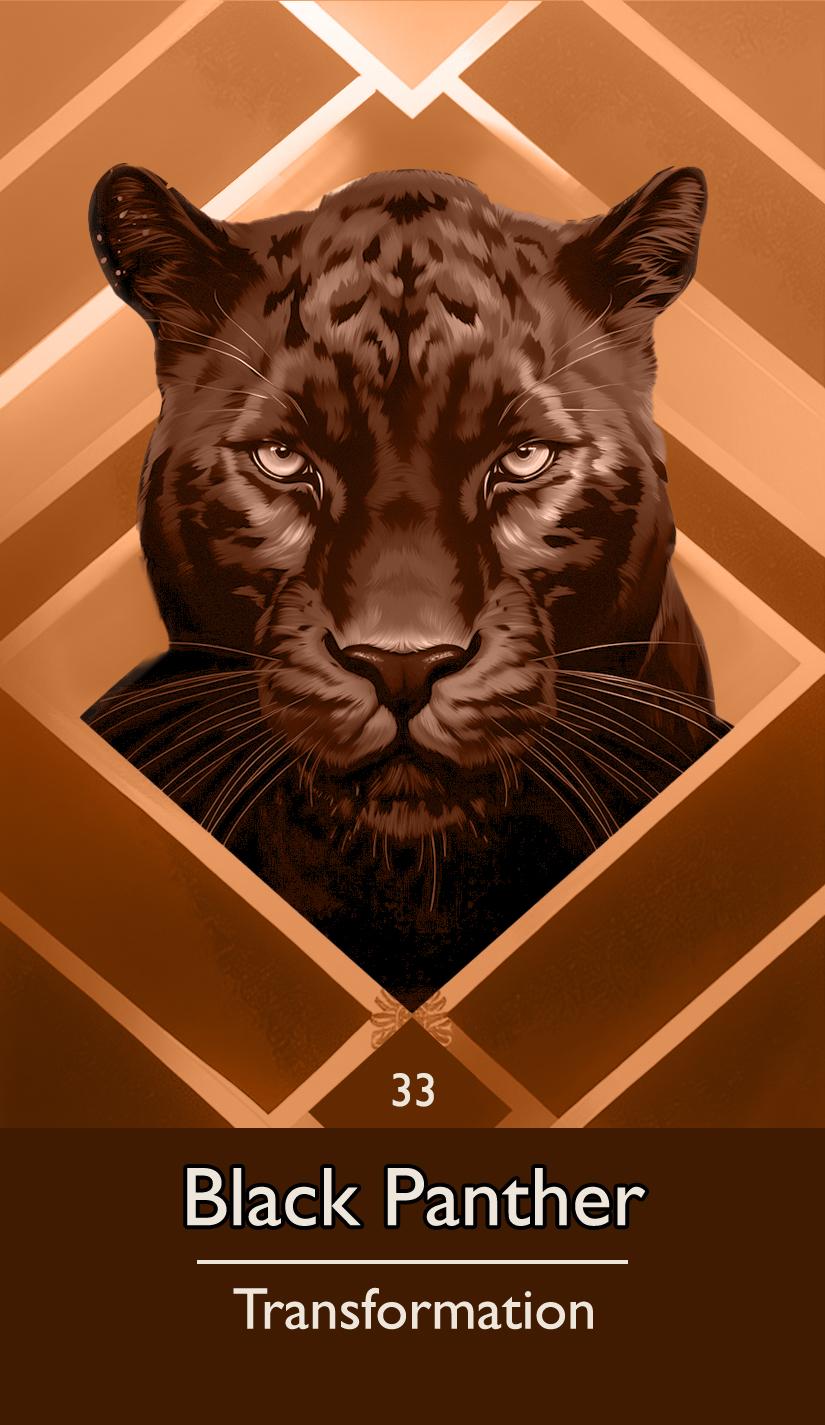
The Black Panther oracle card means transformation through struggle. It asks you to face the thing you've been avoiding, and it says you are changing even when it doesn't feel like it. In a daily draw, it usually points at one specific fear you've been walking around, and it asks for one small step toward it this week.
Black Panther Oracle Card Meaning: What It Points At
The panther lives in the dark and moves through it without panic. That's the whole image. Darkness here isn't a punishment or a bad omen. It's the territory where the next version of you gets built.
The card's keyword is Transformation, and its message is blunt: change is not comfortable, and it is necessary. Nobody gets rebuilt while staying exactly where they are and avoiding everything that scares them.
Three things sit inside that message:
- Face the darkness. Something you've been steering around: a conversation, a decision, a number, a diagnosis you haven't looked up, a creative risk, a habit you know is costing you.
- Rebirth comes through struggle. The struggle isn't a sign you're doing it wrong. It's often the mechanism.
- You're transforming even when it doesn't feel like it. Progress in the dark is hard to see. The card asks you not to mistake "I can't see it yet" for "nothing is happening."
This is a reflection card, not a forecast. It doesn't tell you how things will turn out. It tells you where to look.
How to Read Black Panther in a Daily Draw
When this card lands as your one card for the day, don't ask "what's going to happen?" Ask "what am I avoiding?" Usually an answer arrives within a few seconds, and it's usually the first thing that came to mind, then got pushed away.
Here are three common ways the card shows up. Read yourself honestly against each one.
1. A specific fear you've been dodging
This is the most direct reading. There's a task, a talk, or a truth with a name on it. You've rearranged your week around not touching it. The panther says: that's the one.
2. A season of discomfort you're in the middle of
Sometimes there's nothing to confront because the struggle is already here: a job change, a breakup, a loss, a stretch where your old way of operating stopped working. In that case the card isn't asking you to go find a fear. It's asking you to stop fighting the fact that you're in transition, and to stop expecting yourself to feel settled yet.
3. Something that needs to end
Transformation means something gets left behind. It might be an identity (the guy who always handles everything alone), a story ("I'm just not someone who..."), or a pattern. Ask what you're holding onto that the next version of you can't carry.
If more than one fits, pick the one that makes your stomach tighten slightly. That's usually the right one.
What the Card Is Not Saying
A few misreadings worth clearing up:
- It isn't telling you to "get tough" and grind through anything. Facing a fear is different from punishing yourself.
- It isn't saying suffering is good. The point is that avoidance has a cost too, and a small, chosen discomfort often beats a large, postponed one.
- It isn't a promise. Facing something doesn't guarantee it goes well. It guarantees you stop spending energy hiding from it.
- It isn't a call for one dramatic move. The homework is deliberately small.
The Homework: One Fear, One Small Step, This Week
The deck's assignment for this card is simple: confront one fear you've been avoiding, and take the first small step toward it this week. Here's a way to make that concrete.
Step 1: Name it in one plain sentence
Not a theme. A sentence. "I'm afraid to tell my business partner I want out." "I'm afraid to open my bank statements." "I'm afraid that if I try to write this, it'll be bad." If you can't say it in one sentence, you're still circling it.
Step 2: Shrink the step until it's almost embarrassing
The first step toward a fear should take under thirty minutes and shouldn't require courage you don't have yet. Examples:
- Fear of a hard conversation: draft the first two sentences you'd say. Don't send them.
- Fear of finances: open the account and look at the balance. Just look.
- Fear of a health appointment: find the number and put it in your phone.
- Fear of starting a project: work on it for ten minutes, badly, on purpose.
- Fear of asking for help: write down the one person you'd ask and what you'd ask them.
The step isn't the resolution. It's contact. Once you've touched the thing, it stops being a shadow and becomes a task.
Step 3: Put it on the calendar
A fear you intend to face "sometime" will outlast you. Pick a day and a time this week. Write it down where you'll see it.
Step 4: Do it, then write one line
Afterward, note what actually happened versus what you expected. Not a journal entry, just a line: "Expected disaster. Got an awkward five minutes." That record is useful. Over time it shows you how reliable your fear forecasts really are.
Step 5: Decide the next step, not the whole route
You don't need the full plan. You need to know what the second small step is. That's how you move through the dark: one stride at a time, eyes adjusting as you go.
Questions to Sit With
If you want to go a bit deeper than the homework, try these:
- What have I rearranged my life to avoid?
- If I knew this fear would still be here in a year, what would I want to have done about it by then?
- What would I tell a friend in this exact position?
- What am I afraid I'll find out if I look?
- What would the version of me I respect most do first?
Pick one. Answer it in writing, even badly.
When the Fear Needs More Than a Card
One honest limit: a daily card can prompt reflection, but it isn't treatment for anything. If the thing you're avoiding is tied to trauma, panic, addiction, thoughts of harming yourself, or anything that feels bigger than you can safely handle alone, talk to a licensed professional or a crisis line in your area. Reaching out isn't a failure of the Black Panther's message. It's often exactly the first small step the card is pointing at.
Reading It Over Time
If Black Panther shows up more than once in a few weeks, treat that as information about where your attention keeps going, not as a sign from the universe. Check your past readings and see what you wrote the last time it appeared. Did you take the step? Did the fear change shape? Often the first fear is a doorway to a deeper one, and the second draw is the follow-up question.
If you're not sure which of your own patterns tends to keep you stuck, the Oracle Messenger quiz is a quick way to see which card speaks to how you operate.
The Takeaway
Transformation is not comfortable. It is necessary. The card doesn't ask you to feel brave. It asks you to move one step toward the thing you've been avoiding, and to trust that the change is underway even if you can't see it yet.
If you haven't drawn yet today, draw today's reading. If Black Panther is already in your hand, you know the assignment: name the fear, shrink the step, put it on the calendar this week.